A MoldHawk inspection starts with the property concern and agreed scope, then combines accessible visual observations, moisture investigation, photographs and justified sampling. Released findings connect that evidence with limitations and next steps.
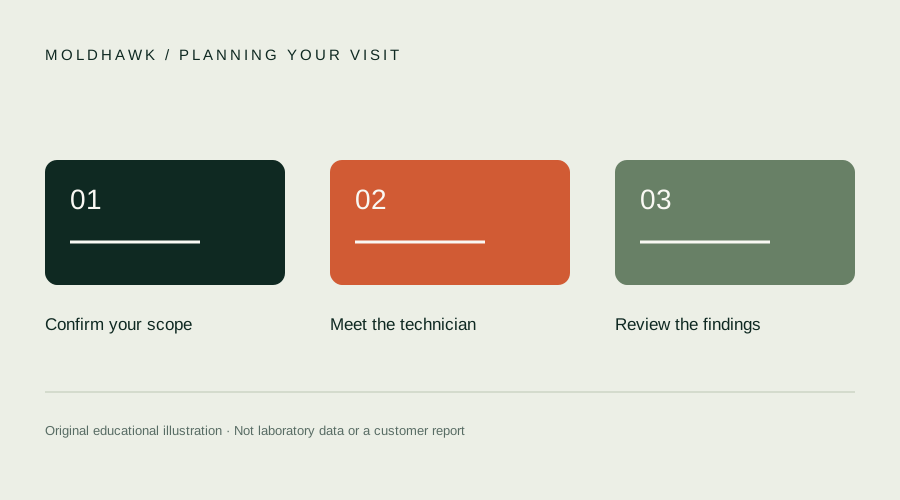
Before the appointment
Share the property type, approximate size, concern areas and relevant moisture history. If there is a transaction or repair deadline, bring it up before selecting a window. Appointment availability and laboratory turnaround are separate questions.
Confirm who will provide access and whether any rooms, units or shared spaces are restricted. Commercial, specialty and complex work needs a custom scope. Do not assume a standard package includes every building or concealed cavity.
During the property visit
Your technician investigates the accessible areas in the confirmed scope, records observations and moisture readings and photographs relevant conditions. This provides the context for any specimens collected.
Ask how proposed sampling relates to the original question. Samples are selected for their purpose, not simply to use the allowance. Outdoor comparisons count toward the allowance, and optional extra samples require approval.
After specimens are collected
The laboratory performs the agreed analysis. That analytical output is one part of the record, alongside the property observations. Different methods may produce different kinds of findings or units.
Your customer portal displays actual order updates and released documents. It is a record of the team’s updates, not a promise that every order follows an identical laboratory timetable.
When you review the findings
Read the inspection summary and applicable laboratory PDF together. Discuss what was sampled, how observations relate to the results, what was inaccessible and whether further investigation is appropriate.
MoldHawk provides independent investigation, testing and reporting. Cleanup or repair is handled separately. EPA’s sampling guidance supports choosing analysis for an inspection question rather than treating testing as a universal first step.
Before the technician leaves, ask how your original concern will be addressed in the written findings and how you can access the released documents. If a room was not accessible, make sure that is recorded. A clear access limitation is useful information when deciding whether a separate visit is needed.
Your practical checklist
- Prepare a short property and moisture history.
- Confirm access, sample allowance and extra charges.
- Review the inspection context with the laboratory output.
Sources & scope
Scientific background and public guidance:
MoldHawk service details are described on our package pages. Published by MoldHawk for property-inspection education. Your property-specific scope and laboratory method control the actual inspection and report.
Turn the question into a defined scope.
Choose an inspection based on your property, concern areas and the decision you need to make.
See testing options →Book a professional assessment