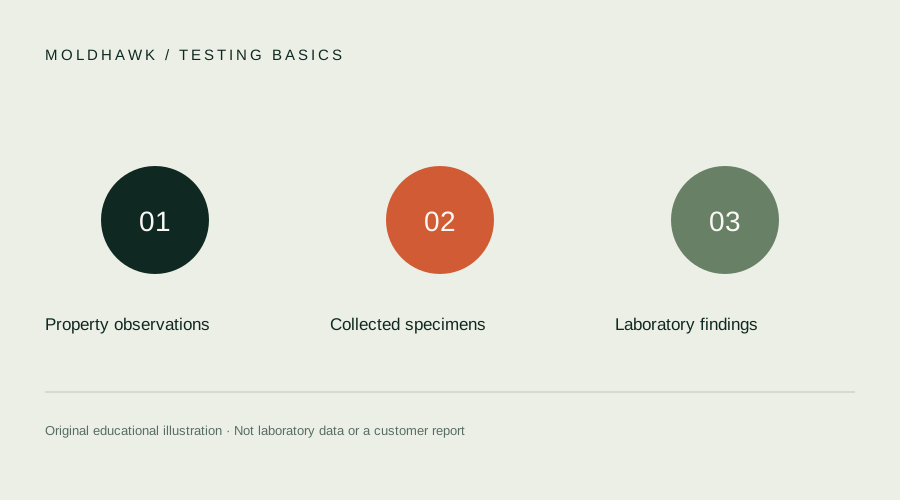
An inspection investigates property conditions. Sampling collects specimens from selected locations. Laboratory testing analyzes those specimens using a defined method. A helpful report explains how those pieces fit together.
Start with the property question
“Why does this stain return?” and “What was observed in this collected specimen?” are different questions. The first may require moisture history and accessible observations; the second calls for an analytical method. A package should make clear which questions are within scope.
At MoldHawk, the visit brings together visual assessment, moisture investigation, photographs and purposeful sampling when justified. Cleanup and repairs are handled separately by the provider you choose.
What the laboratory can add
A laboratory result can describe categories or structures in the specimen, within the selected method’s limits. It needs a collection location, an identification reference and method notes to be useful. It cannot describe every part of a building that was never sampled.
Air and surface findings also answer different questions. A surface observation cannot simply be read as an airborne concentration. An air specimen is collected under particular conditions, at a particular place and time.
Testing is not automatically the first step
EPA explains that sampling is often unnecessary where growth is already visible. That does not make documentation unimportant. It means the collection plan should have a reason beyond producing a number.
Before booking, ask what the proposed analysis would change about the next step. If the answer is unclear, discuss the inspection question and whether observations alone may address it.
Read the final documents as a set
Your inspection summary should connect sample locations with the observed conditions and explain access limits. The laboratory PDF preserves the analytical output; the inspection report supplies the property context.
A clear next step may include addressing moisture, obtaining a separate cleanup scope or investigating an inaccessible area. It should also identify what remains uncertain rather than imply that one result resolves every concern.
Your practical checklist
- Ask what question the inspection will answer.
- Confirm the proposed collection method and locations.
- Request explanations of observations, results and limits together.
Sources & scope
Scientific background and public guidance:
MoldHawk service details are described on our package pages. Published by MoldHawk for property-inspection education. Your property-specific scope and laboratory method control the actual inspection and report.
Turn the question into a defined scope.
Choose an inspection based on your property, concern areas and the decision you need to make.
See testing options →Book a professional assessment