A recurring musty smell deserves a careful look at the property’s moisture history and accessible conditions. An odor alone does not identify a mold species, locate a hidden source or determine which test is appropriate.
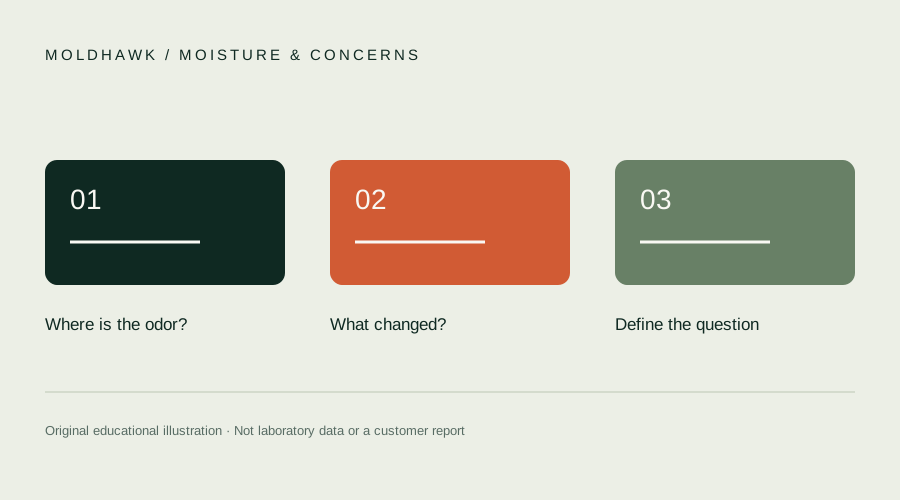
Make the concern specific
Write down the room, the approximate area and when you notice the odor. Does it appear after rain, after using a bathroom or only when a space has been closed? Those observations help frame the investigation without diagnosing the cause.
Include recent repairs, leaks and changes in room use. Separate what you observed from what someone suggested might be happening. A useful starting record is a short timeline, not a list of assumed mold types.
Prepare for an accessible investigation
A technician can review the concern location, visible conditions and moisture clues within the agreed scope. Tell the team about access restrictions and surfaces that cannot be reached. Do not assume the visit includes opening walls.
EPA’s home guide discusses hidden mold and cautions that disturbing concealed areas can release spores. Discuss an appropriate investigation plan rather than pulling away finishes to obtain a better photograph.
Choose sampling for a reason
A specimen should answer a defined question. Ask what an air or surface sample would add to the observations and how the findings would be interpreted. A result from a different room may not resolve the concern you described.
Record the remaining uncertainty if a source is not found in accessible areas. A negative or inconclusive specimen should not be turned into a guarantee about every concealed condition.
Use the follow-up conversation well
Bring your timeline, access information and the decision you need to make. You may be planning a repair, documenting a recurring condition or deciding whether additional investigation is warranted.
MoldHawk’s scope is investigation, testing and reporting. If the property needs cleanup or repair, that is a separate discussion with the appropriate provider.
Your practical checklist
- Record where and when the odor occurs.
- Share moisture and repair history.
- Confirm access limits and the purpose of any sampling.
Sources & scope
Scientific background and public guidance:
MoldHawk service details are described on our package pages. Published by MoldHawk for property-inspection education. Your property-specific scope and laboratory method control the actual inspection and report.
Turn the question into a defined scope.
Choose an inspection based on your property, concern areas and the decision you need to make.
See testing options →Book a professional assessment