Before arranging testing for a home purchase, define the property concern, accessible scope, access permission and actual deadline. A focused investigation should answer a transaction-related question rather than promise certainty about every concealed condition.
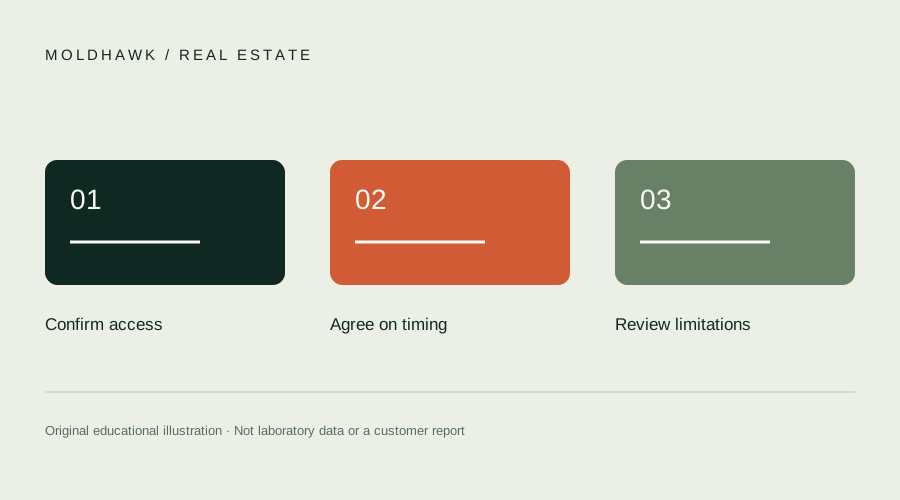
Start with the decision you need to make
Share any reported water events, areas of concern and available property records. Distinguish a visible condition from a concern raised by history or odor. The collection plan should follow the question.
Testing is not automatically required for every purchase. EPA notes that visible mold often does not need sampling. Discuss what a laboratory result would add to the information already available.
Coordinate access and timing
Arrange permission and access with the appropriate property contact. Tell the team about transaction deadlines before requesting a window, and confirm laboratory and report-delivery arrangements separately.
An inspection request is not a guaranteed appointment or a promise to meet a transaction deadline. Get the agreed timing in the service scope rather than assuming that the date shown in a calendar is the report date.
Know what a standard scope excludes
MoldHawk’s standard packages investigate accessible conditions. Concealed cavities, additional buildings, specialty tests and destructive work require a separately confirmed discussion.
Ask how square footage, multiple concern areas and outdoor comparisons affect the scope. If the property exceeds a package limit, use an appropriate broader or custom option rather than expecting a smaller package to cover the entire property.
Use the documents for their intended purpose
Keep the inspection observations and applicable laboratory report together. Review the findings, limitations and any recommendation for further investigation with the relevant professionals.
A mold report is not a legal opinion, an appraisal or a guarantee about future property conditions. Questions about purchase obligations or contractual rights belong with qualified transaction advisers. MoldHawk’s role is independent investigation and reporting.
A useful booking note might say which room is involved, who can provide entry and the date by which you need a written explanation. The team can then discuss whether the requested scope and timing are realistic. That is different from assuming that purchasing a package guarantees a transaction outcome.
Your practical checklist
- Identify the question and available water-history records.
- Confirm permission, access and transaction deadlines.
- Request scope and report timing in writing.
Sources & scope
Scientific background and public guidance:
MoldHawk service details are described on our package pages. Published by MoldHawk for property-inspection education. Your property-specific scope and laboratory method control the actual inspection and report.
Turn the question into a defined scope.
Choose an inspection based on your property, concern areas and the decision you need to make.
See testing options →Book a professional assessment