For an apartment or managed property, define the units and common areas involved, the concern locations, access contacts and documentation needs before selecting samples. Commercial or multi-building work requires a custom scope.
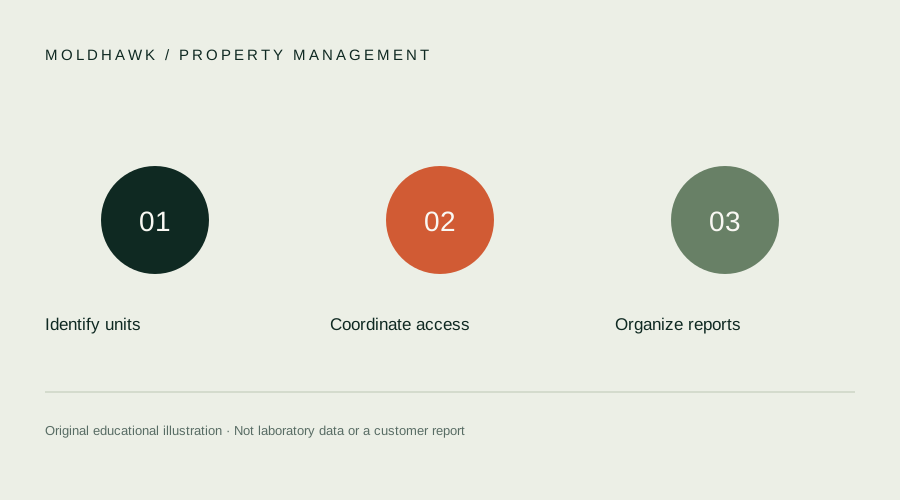
Scope the locations precisely
Identify each affected unit or common area by a clear location reference. Avoid mixing a room name from one unit with a specimen collected in another. Provide the on-site contact and any access restrictions.
For a portfolio inquiry, prepare a property list and explain whether you need a single visit or separate scopes. Do not assume one residential package covers several units, shared systems or multiple buildings.
Organize the history
Keep resident observations, maintenance reports, leak dates and repair records distinct. A short timeline for each concern area can make the investigation more focused.
Ask what information the technician needs before arrival. Supply relevant property facts without sending unrelated medical records or confidential resident information through an inquiry form.
Match specimens to the question
An air specimen and a surface specimen describe different evidence. Discuss why each location is proposed and how laboratory findings will be connected to the inspection record.
EPA’s commercial-building guide emphasizes moisture investigation and planning. A useful report should identify the inspected locations, access limits and unanswered questions rather than present a single property-wide pass/fail number.
Keep follow-up responsibilities clear
Separate inspection, laboratory analysis, cleanup and repair. MoldHawk provides investigation and reporting; remediation is handled independently.
Confirm how released documents will be organized and who is authorized to receive them. Each inspection has a separate order and report record. Follow-up work after repairs should have an agreed scope and site-readiness criteria.
For example, prepare a simple location key before a multi-unit discussion: building identifier, unit, room, concern and access contact. Keep each location distinct in the inspection request. If several parties will receive documents, agree on authorization and delivery rather than forwarding a report containing information about unrelated occupants.
Your practical checklist
- List units, common areas and contact/access details.
- Prepare location-specific moisture and repair histories.
- Confirm custom scope, report recipients and next steps.
Sources & scope
Scientific background and public guidance:
MoldHawk service details are described on our package pages. Published by MoldHawk for property-inspection education. Your property-specific scope and laboratory method control the actual inspection and report.
Turn the question into a defined scope.
Choose an inspection based on your property, concern areas and the decision you need to make.
See testing options →Book a professional assessment