Air sampling characterizes a collected air specimen. Surface sampling examines material from a specific surface. They answer different questions and should be chosen to support the property investigation, not treated as interchangeable tests.
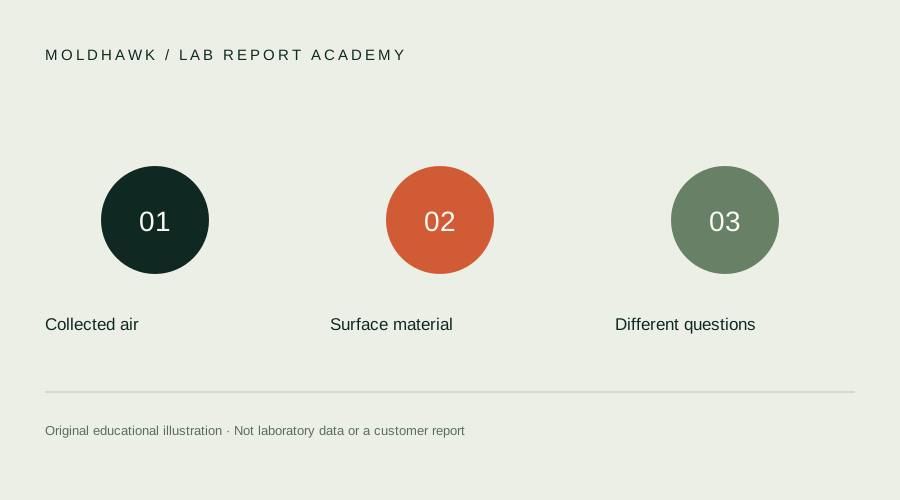
The question behind an air specimen
An air report may organize observed categories and volume-adjusted measurements for selected collection locations. A comparison specimen may help provide context, but it counts toward MoldHawk’s sample allowance.
Ask why each location was selected and what conditions were recorded. A short collection is not a permanent description of a room. A plan built around your inspection question is more meaningful than a promise to sample every room identically.
The question behind a surface specimen
Tape lifts, swabs and material specimens focus on what was collected at a particular location. The analytical method determines whether the report describes fungal structures, categories or other findings.
A surface finding should stay connected to the sampled material. It cannot be converted into a room-wide airborne concentration. Likewise, an air result cannot document every concealed surface.
Why the methods may be combined
A technician may identify different questions during the same visit: one about a particular material and another about a collected air specimen. When both are relevant, the scope should explain why each specimen is included.
The choice should also account for accessible conditions and any method limitations. If an additional specimen would exceed the allowance, confirm the charge and give approval before collection.
What to ask before the visit
Confirm locations, the specimen type and the question each analysis addresses. Ask whether an outdoor comparison is planned, how it affects the allowance and how the findings will appear in your report.
EPA recommends experienced sampling design and interpretation and notes that testing is often unnecessary for visible growth. Standard mold identification is also different from a specialty mycotoxin analysis; one should not be sold as proof of the other.
Your practical checklist
- Match the method to the question.
- Confirm the allowance and outdoor comparison specimens.
- Keep surface findings and air measurements in their own context.
Sources & scope
Scientific background and public guidance:
MoldHawk service details are described on our package pages. Published by MoldHawk for property-inspection education. Your property-specific scope and laboratory method control the actual inspection and report.
Turn the question into a defined scope.
Choose an inspection based on your property, concern areas and the decision you need to make.
See testing options →Book a professional assessment